Client money brings a level of scrutiny that ordinary business bookkeeping never faces. The SRA Accounts Rules govern how solicitors hold client money, keep client ledgers, and reconcile the client account at least every five weeks. A slip in any of those areas puts your firm at risk of a reportable breach. Our bookkeeping service for UK solicitors keeps the client account clean, the office account current, and your records ready for the reporting accountant.
Most law firms lose hours to bookkeeping that was never designed for legal practice. Generic providers treat a client account like any other bank account, and the gaps surface at reconciliation, at year end, or in a qualified accountant’s report. Legal Bookkeeping Online works with law firms only. That focus means your client ledgers, disbursements, and VAT treatment are handled correctly the first time, every month, without partner time spent on corrections.
Bookkeeping for UK Law Firms: Why Law Firms Need Specialist Bookkeeping
Client money never belongs to the firm, and Rule 4.1 of the SRA Accounts Rules requires it to be kept separate from the firm’s own money at all times. One misposted receipt can breach that separation and trigger a chain of corrections.
Record keeping under Rule 8.1 goes well beyond a bank feed. Each client ledger must carry the client’s name and a description of the matter, supported by a running list of client balances and a cash book covering every client account transaction.
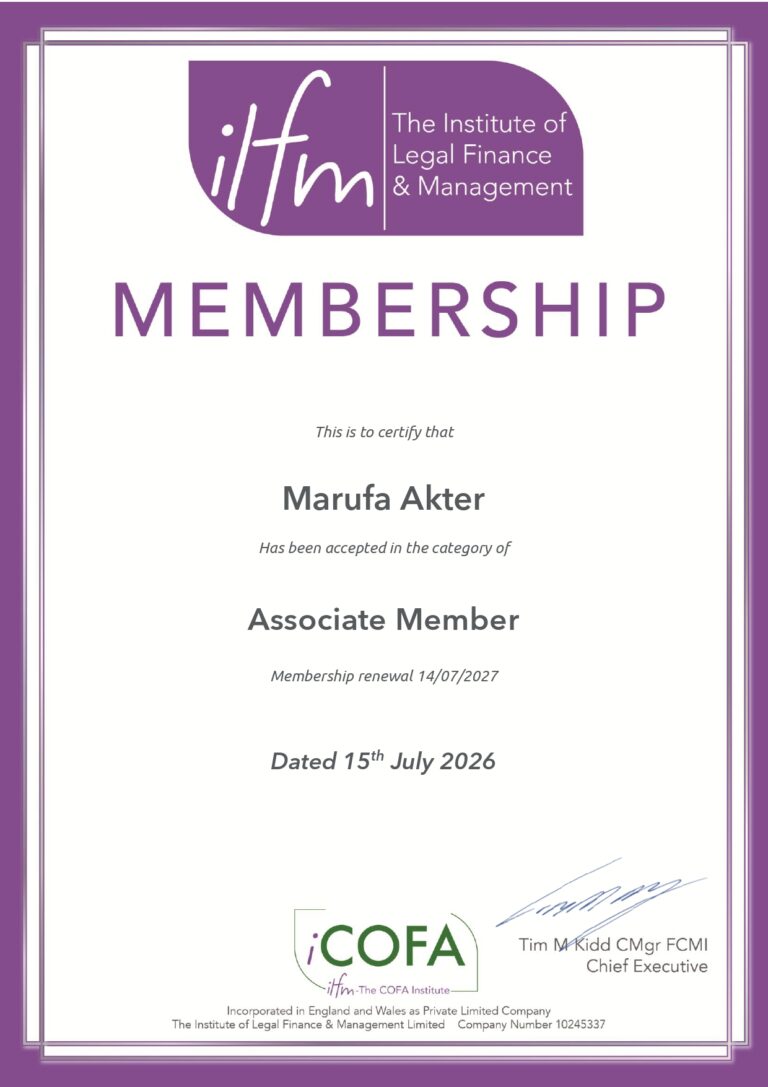
Timing adds further pressure. Bank statements must be obtained at least every five weeks, and the reconciliation for the same period needs sign-off by your COFA or a manager. Firms that fall behind rarely catch up without outside help.

Our Law Firm Bookkeeping Services
Legal bookkeeping done properly protects your practising certificate as much as your profit margin. Records that satisfy the SRA also make VAT returns, partner drawings, and year end far less painful. Our service covers the client side and the business side of your ledgers, month after month, with the detail the Accounts Rules demand.
Client Account Bookkeeping
Every receipt, transfer, and payment posted to the correct client ledger, with matter descriptions that meet Rule 8.1 record keeping standards.
Five-Week Reconciliations
Client account reconciliations prepared to the Rule 8.3 cycle, with a clean sign-off pack ready for your COFA or a firm manager.
Office Account and VAT
Fee income, overheads, and disbursements posted accurately, with VAT treatment separated correctly between client account and office account transactions.
Disbursement Tracking
Paid and unpaid disbursements tracked against each matter, so billing stays accurate and recoverable costs are never written off by accident.
Billing and Fee Transfers
Bills recorded before any transfer of costs leaves the client account, keeping Rule 4.3 satisfied and your central record of bills complete.
Year End Records Pack
Ledgers, reconciliations, and supporting documents organised so your reporting accountant can complete the annual report without chasing your team.
Benefits of Our UK Law Firm Bookkeeping Services
Legal Bookkeeping handles the detail that general providers miss. Our team knows the Accounts Rules, the software your practice already uses, and the exact questions a reporting accountant will ask at the end of your accounting period.
Accurate Client Ledgers and Matter Records
We maintain client ledgers that identify the client by name and describe the matter they relate to, exactly as Rule 8.1 requires. Client money postings and business side postings are kept on separate sides of the ledger, backed by a running list of client balances and a cash book covering all client account activity. Nothing is parked in a suspense account, and every posting carries a document reference your team can trace in seconds.
Five-Week Client Account Reconciliation
Bank and building society statements are obtained at least every five weeks under Rule 8.2, and the matching reconciliation is completed within the same window. We agree the statement balance to the cash book balance and the client ledger total, then investigate any difference before it reaches your COFA. The finished pack arrives ready for signature, with a short note explaining every adjustment made during the period.
VAT Returns and Making Tax Digital
VAT-registered firms must keep digital records and file returns through compatible software. We prepare your VAT returns, apply the correct treatment to disbursements, and keep the digital trail HMRC expects between source documents and submitted figures. Sole practitioners with qualifying income above 50,000 pounds came into Making Tax Digital for Income Tax from April 2026, which means quarterly updates rather than a single annual return. Our records are built for that cycle.
How Our Law Firm Bookkeeping Service Works
Firms holding client money must obtain an accountant's report within six months of the accounting period end under Rule 12.1, and deliver it to the SRA only where the report is qualified. We prepare the ledgers, reconciliations, bank details, and supporting documents your reporting accountant needs to reach a clean opinion. Accounting records are stored securely and retained for the six years Rule 13.1 requires.
How Our Law Firm Bookkeeping Service Works
Bookkeeping problems in law firms rarely announce themselves. Small posting errors build quietly until a reconciliation stops balancing or a reporting accountant starts asking questions your team cannot answer.
The first step is a review and correction pass. We examine the client account, the office account, open matters, and your latest reconciliation, then put right whatever is wrong. Rule 6.1 requires breaches to be corrected promptly on discovery, and every correction is documented rather than quietly absorbed. Daily work then settles into a rhythm. Transactions are posted as they arise, disbursements matched to the right matters, bills recorded before any fee transfer, and the client account reconciled inside the five-week window with a sign-off pack delivered to your nominated manager. |
Software setup comes second. Your chart of accounts, client ledgers, and matter structure are configured in QuickBooks or Xero, and connected to your case management platform where one is in use. Consistent setup at this stage prevents most of the posting errors that create backlogs later.
Reporting closes the loop. Each month you receive client account balances, aged debtors, work in progress, and profitability by matter type, presented plainly enough for partners without a finance background. Year end becomes a handover rather than a scramble through boxes of paperwork.
Why Choose Legal Bookkeeping for Solicitor Bookkeeping?
Legal Bookkeeping works with law firms and nobody else. Our team pairs legal accounting knowledge with hands-on experience across the platforms UK practices use daily, from cloud accounting software to legal case management systems.
Legal Sector Focus
Law firms are our only client type, so Accounts Rules knowledge is built into the work rather than bolted on afterwards.
Certified Software Expertise
Our certified QuickBooks experts organize complex legal records, using specialized features like trust accounting and matter tracking for accuracy.
Reconciliation Discipline
Client account reconciliations completed inside the five-week cycle, every cycle, with documentation your COFA can sign without chasing anyone.
Plain Reporting
Direct contact with the bookkeeper on your file, plus monthly reports partners can read without an accounting background.
Trusted Experts
Compliance is not a one-off project. We build the routine that keeps your records right between reconciliations, quarters, and year ends.
Our team acts as an extension of your practice, turning scattered ledgers into records that stand up to a reporting accountant, the SRA, and your own partners.
Who We Work With
Legal Bookkeeping serves sole practitioners, small and mid-sized law firms, and practices carrying heavy client account activity across conveyancing, private client, family, and litigation work. New firms, established practices, and firms clearing a backlog all receive the same standard of record keeping, reconciliation, and reporting.





About Our Team
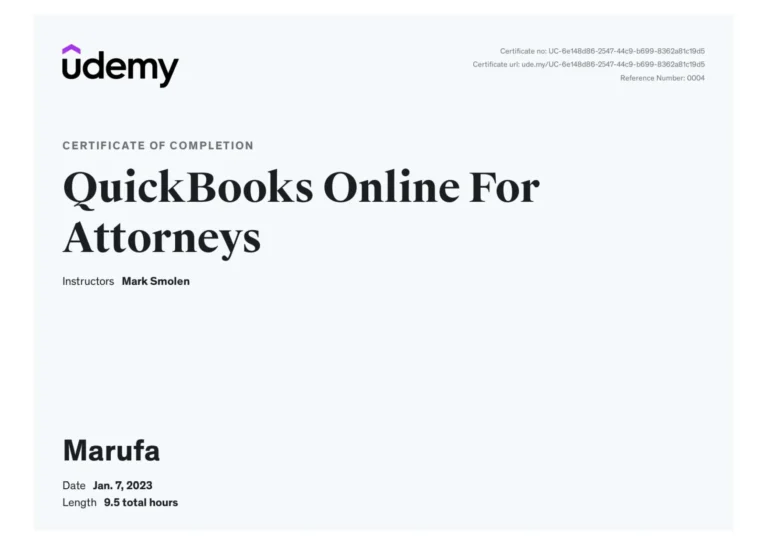
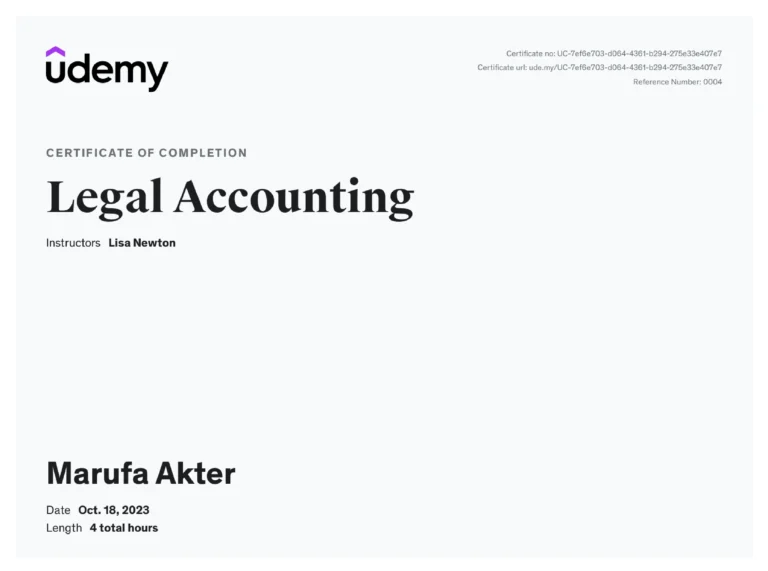
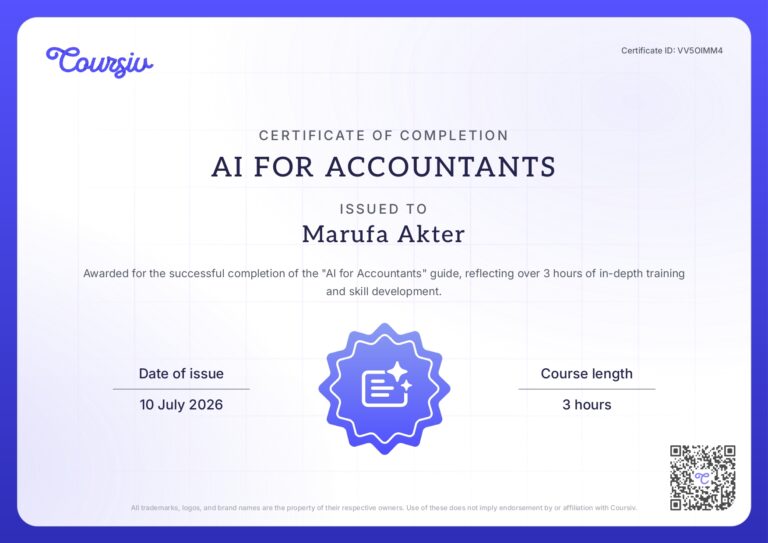
Founder Marufa Akter, a QuickBooks Certified ProAdvisor, brings 15+ years of legal bookkeeping and trust accounting experience. Managing Partner Samia Dowla adds business management depth, and bookkeeper Mahajabin Khandoker supports day-to-day client ledger and reconciliation work.



Get Started With Professional Backlog Cleanup Today
Client account compliance does not have to take up fee-earning time. Let our team handle the ledgers, reconciliations, VAT, and monthly reporting while you concentrate on clients. Contact us today for a no-obligation review of your firm's current bookkeeping position.
Do UK solicitors need a specialist bookkeeper?
Firms holding client money answer to the SRA Accounts Rules as well as HMRC. General bookkeepers rarely work with client ledgers, five-week reconciliations, or disbursement treatment, and errors in those areas can become reportable breaches rather than simple corrections.
Can you complete our client account reconciliations?
Yes. Reconciliations are prepared inside the Rule 8.3 five-week cycle, agreeing the bank statement balance to the cash book balance and the client ledger total. Differences are investigated and documented before the pack reaches your COFA or manager for sign-off.
Do you prepare the annual accountant's report?
No. Rule 12.5 requires the report to be prepared and signed by a member of a chartered accountancy body who is, or works for, a registered auditor. Our role is preparing the records so your reporting accountant reaches a clean opinion without delays.
Is the service suitable for sole practitioners?
Yes. Sole practitioners carry the same client money obligations as larger firms, usually without any finance staff to share the load. Our service covers the full bookkeeping cycle at a scale and price point that suits a single-solicitor practice.
Can you work with our existing case management software?
Yes. We work across cloud accounting platforms such as QuickBooks and Xero alongside legal systems such as Clio and LEAP. Data flowing between the two is checked each period so your matter records and accounting ledgers agree rather than drift apart.
Do you handle VAT returns and Making Tax Digital?
Yes. VAT-registered firms must keep digital records and file through compatible software. We prepare the returns, apply correct treatment to disbursements, and maintain the digital link between source documents and submitted figures that HMRC expects to see.
Will you help if our bookkeeping has fallen behind?
Yes. Backlogs build up after staff changes, rapid growth, or a software migration. We work chronologically through the outstanding periods, prioritising client account reconciliation and any potential breaches, then set a routine that keeps records current from then on.
Does the service cover both the client account and the office account?
Yes. Both sides are handled together. Client money postings follow the Accounts Rules, while office account work covers fee income, overheads, payroll journals, and the monthly management reports partners rely on to price work and plan drawings.